Buy bhkw.eu ?
We are moving the project
bhkw.eu .
Are you interested in purchasing the domain
bhkw.eu ?
domain@kv-gmbh.de · 0541-91531010
Buy bhkw.eu ?
What is the DIN18015-1-2020-05-61 for communication distributors?
The DIN18015-1-2020-05-61 is a German standard that specifies the requirements for communication distributors in buildings. It covers the design, installation, and operation of communication distributors to ensure reliable and efficient communication networks. This standard outlines guidelines for the planning and implementation of communication distributors to meet the needs of various communication systems, such as telephone, data, and multimedia. Adhering to this standard helps ensure the quality and performance of communication networks in buildings. **
Is the efficiency ever greater than 1?
No, efficiency is never greater than 1. Efficiency is a measure of how well a system or process uses energy or resources to produce a desired output. A value greater than 1 would indicate that the system is producing more output than the input, which violates the principle of conservation of energy. Therefore, efficiency values are always between 0 and 1, with 1 representing perfect efficiency. **


Similar search terms for DIN18015-1
Top-Angebote
Products related to DIN18015-1:
-
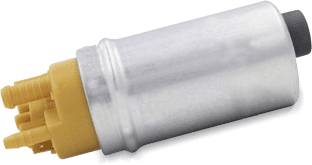
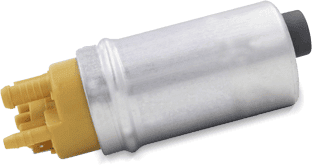
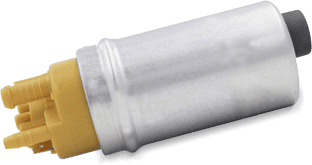
ENERGY G10065/1 Fuel pumpVoltage [V]: 12; Fitting Position: in the fuel tank; Operating Mode: Electric; Fuel Type: Petrol; Flow rate [l/h]: 120; Injection System: Multi Point Injection (MPI); Supplementary Article / Supplementary Info Info 2: with filter; Weight [kg]: 0,56; Diameter 1 [mm]: 8; Diameter 2 [mm]: 12; Operating Pressure [bar]: 4; Number of inlets/outlets: 1/1; Length 2 [mm]: 134; Always compare old and new part (in particular OE No.):34,49 £*Shipping: 8,45 £Secure redirect to the provider
-
ENERGY G20070/1 Fuel pumpVoltage [V]: 12; Fitting Position: Fuel Line; Operating Mode: Electric; Weight [kg]: 0,78; Always compare old and new part (in particular OE No.): ; Operating Pressure [bar]: 4; Fuel Type: Petrol; Number of inlets/outlets: 1/1; Flow rate [l/h]: 170; Length 1 [mm]: 153; Length 2 [mm]: 217; Supplementary Article / Supplementary Info Info 2: with connector parts; Vehicle Identification Number (VIN) from: A229602, A01683738,49 £*Shipping: 8,45 £Secure redirect to the provider
-
ENERGY G10003/1 Fuel pumpVoltage [V]: 12; Fitting Position: in the fuel tank; Diameter: 36; Operating Mode: Electric; Flow rate [l/h]: 110; Supplementary Article / Supplementary Info Info 2: with filter; Weight [kg]: 0,33; Diameter 1 [mm]: 8; Diameter 2 [mm]: 22; Operating Pressure [bar]: 3; Number of inlets/outlets: 1/1; Length 1 [mm]: 72; Length 2 [mm]: 130; Always compare old and new part (in particular OE No.):23,49 £*Shipping: 8,45 £Secure redirect to the provider


-
What is the power series representation of 1/(1-x)?
The power series representation of 1/(1-x) is the geometric series. It can be expressed as the sum from n=0 to infinity of x^n. This series converges for |x| < 1 and represents the function 1/(1-x) for that interval. The power series representation is a useful tool for approximating the function and understanding its behavior. **
-
Why does 1 to the power of 4 and 1 to the power of 4 both result in 1?
Both 1 to the power of 4 and 1 to the power of 4 result in 1 because any number raised to the power of 1 is equal to the number itself. In this case, 1 raised to the power of 4 means multiplying 1 by itself 4 times, which still results in 1. Therefore, both expressions yield the same result of 1. **
-
Does photosynthesis supposedly have an efficiency of only 1 percent?
No, photosynthesis does not have an efficiency of only 1 percent. The efficiency of photosynthesis can vary depending on various factors such as the type of plant, environmental conditions, and the availability of resources. On average, the efficiency of photosynthesis in plants is estimated to be around 3-6 percent. However, some studies suggest that certain plants or artificial systems can achieve efficiencies of up to 10 percent. **
-
Why is the efficiency of transformers always less than 1?
The efficiency of transformers is always less than 1 due to energy losses that occur during the transformation process. These losses can be attributed to factors such as resistance in the windings, hysteresis losses in the core material, and eddy current losses. As a result, not all the input electrical energy is converted into output electrical energy, leading to an efficiency of less than 1. Transformers are designed to minimize these losses, but they cannot be completely eliminated, hence the efficiency is always less than 1. **

What is energy efficiency?
Energy efficiency refers to using less energy to perform the same task or function, ultimately reducing energy waste and lowering energy costs. This can be achieved through various methods such as using energy-efficient appliances, improving insulation in buildings, and implementing energy-saving practices in industrial processes. Energy efficiency is an important aspect of sustainable development and can help reduce greenhouse gas emissions and mitigate the impact of climate change. By improving energy efficiency, we can conserve natural resources and create a more sustainable and environmentally friendly energy system. **
Why is 1 * 1 another way of writing 1 * 1 * 1?
1 * 1 is another way of writing 1 * 1 * 1 because when you multiply a number by 1, the value of the number remains unchanged. In other words, multiplying by 1 does not alter the original number. Therefore, when you multiply 1 by 1, the result is still 1, and when you multiply that result by 1 again, it remains 1. This is why 1 * 1 is equivalent to 1 * 1 * 1. **
Top-Angebote
Products related to DIN18015-1:
-
ENERGY G10013/1 Fuel pumpVoltage [V]: 12; Fitting Position: in the fuel tank; Diameter: 43; Operating Mode: Electric; Flow rate [l/h]: 85; Injection System: Single Point Injection (SPI); Supplementary Article / Supplementary Info Info 2: with filter; Weight [kg]: 0,36; Diameter 1 [mm]: 8; Diameter 2 [mm]: 12; Operating Pressure [bar]: 1,1; Number of inlets/outlets: 1/1; Length 1 [mm]: 74; Length 2 [mm]: 125; Always compare old and new part (in particular OE No.): ; Engine Code: HDZ; Vehicle Identification Number (VIN) from: J1002038; Construction Year from: 09/1996; Construction Year to: 08/200017,99 £*Shipping: 8,45 £Secure redirect to the provider
-
ENERGY G10082/1 Fuel pumpVoltage [V]: 12; Fitting Position: in the fuel tank; Operating Mode: Electric; Weight [kg]: 0,35; Always compare old and new part (in particular OE No.): ; Flow rate [l/h]: 90; Injection System: Multi Point Injection (MPI); Supplementary Article / Supplementary Info Info 2: with filter, with connector parts; Construction Year to: 12/1994; Engine Code: LFZ <XU7JP>, NFZ <TU5JP>21,49 £*Shipping: 8,45 £Secure redirect to the provider
-
ENERGY G10065/1 Fuel pumpVoltage [V]: 12; Fitting Position: in the fuel tank; Operating Mode: Electric; Fuel Type: Petrol; Flow rate [l/h]: 120; Injection System: Multi Point Injection (MPI); Supplementary Article / Supplementary Info Info 2: with filter; Weight [kg]: 0,56; Diameter 1 [mm]: 8; Diameter 2 [mm]: 12; Operating Pressure [bar]: 4; Number of inlets/outlets: 1/1; Length 2 [mm]: 134; Always compare old and new part (in particular OE No.):34,49 £*Shipping: 8,45 £Secure redirect to the provider
-
ENERGY G20070/1 Fuel pumpVoltage [V]: 12; Fitting Position: Fuel Line; Operating Mode: Electric; Weight [kg]: 0,78; Always compare old and new part (in particular OE No.): ; Operating Pressure [bar]: 4; Fuel Type: Petrol; Number of inlets/outlets: 1/1; Flow rate [l/h]: 170; Length 1 [mm]: 153; Length 2 [mm]: 217; Supplementary Article / Supplementary Info Info 2: with connector parts; Vehicle Identification Number (VIN) from: A229602, A01683738,49 £*Shipping: 8,45 £Secure redirect to the provider
-
What is the DIN18015-1-2020-05-61 for communication distributors?
The DIN18015-1-2020-05-61 is a German standard that specifies the requirements for communication distributors in buildings. It covers the design, installation, and operation of communication distributors to ensure reliable and efficient communication networks. This standard outlines guidelines for the planning and implementation of communication distributors to meet the needs of various communication systems, such as telephone, data, and multimedia. Adhering to this standard helps ensure the quality and performance of communication networks in buildings. **
-
Is the efficiency ever greater than 1?
No, efficiency is never greater than 1. Efficiency is a measure of how well a system or process uses energy or resources to produce a desired output. A value greater than 1 would indicate that the system is producing more output than the input, which violates the principle of conservation of energy. Therefore, efficiency values are always between 0 and 1, with 1 representing perfect efficiency. **
-
What is the power series representation of 1/(1-x)?
The power series representation of 1/(1-x) is the geometric series. It can be expressed as the sum from n=0 to infinity of x^n. This series converges for |x| < 1 and represents the function 1/(1-x) for that interval. The power series representation is a useful tool for approximating the function and understanding its behavior. **
-
Why does 1 to the power of 4 and 1 to the power of 4 both result in 1?
Both 1 to the power of 4 and 1 to the power of 4 result in 1 because any number raised to the power of 1 is equal to the number itself. In this case, 1 raised to the power of 4 means multiplying 1 by itself 4 times, which still results in 1. Therefore, both expressions yield the same result of 1. **
Similar search terms for DIN18015-1
-
ENERGY G10003/1 Fuel pumpVoltage [V]: 12; Fitting Position: in the fuel tank; Diameter: 36; Operating Mode: Electric; Flow rate [l/h]: 110; Supplementary Article / Supplementary Info Info 2: with filter; Weight [kg]: 0,33; Diameter 1 [mm]: 8; Diameter 2 [mm]: 22; Operating Pressure [bar]: 3; Number of inlets/outlets: 1/1; Length 1 [mm]: 72; Length 2 [mm]: 130; Always compare old and new part (in particular OE No.):23,49 £*Shipping: 8,45 £Secure redirect to the provider
-
ENERGY G10025/1 Fuel pumpVoltage [V]: 12; Fitting Position: in the fuel tank; Diameter: 43; Operating Mode: Electric; Flow rate [l/h]: 70; Injection System: Single Point Injection (SPI); Supplementary Article / Supplementary Info Info 2: with filter; Weight [kg]: 0,6; Diameter 1 [mm]: 9; Diameter 2 [mm]: 51; Operating Pressure [bar]: 1,2; Number of inlets/outlets: 1/1; Length 2 [mm]: 141; Always compare old and new part (in particular OE No.):26,49 £*Shipping: 8,45 £Secure redirect to the provider
-
ENERGY G10059/1 Fuel pumpVoltage [V]: 12; Fitting Position: in the fuel tank; Diameter: 43; Operating Mode: Electric; Fuel Type: Petrol; Flow rate [l/h]: 120; Injection System: Multi Point Injection (MPI); Supplementary Article / Supplementary Info Info 2: with filter; Weight [kg]: 0,56; Diameter 1 [mm]: 8; Operating Pressure [bar]: 4; Number of inlets/outlets: 1/1; Length 2 [mm]: 150; Always compare old and new part (in particular OE No.):36,49 £*Shipping: 8,45 £Secure redirect to the provider
-
Does photosynthesis supposedly have an efficiency of only 1 percent?
No, photosynthesis does not have an efficiency of only 1 percent. The efficiency of photosynthesis can vary depending on various factors such as the type of plant, environmental conditions, and the availability of resources. On average, the efficiency of photosynthesis in plants is estimated to be around 3-6 percent. However, some studies suggest that certain plants or artificial systems can achieve efficiencies of up to 10 percent. **
-
Why is the efficiency of transformers always less than 1?
The efficiency of transformers is always less than 1 due to energy losses that occur during the transformation process. These losses can be attributed to factors such as resistance in the windings, hysteresis losses in the core material, and eddy current losses. As a result, not all the input electrical energy is converted into output electrical energy, leading to an efficiency of less than 1. Transformers are designed to minimize these losses, but they cannot be completely eliminated, hence the efficiency is always less than 1. **
-
What is energy efficiency?
Energy efficiency refers to using less energy to perform the same task or function, ultimately reducing energy waste and lowering energy costs. This can be achieved through various methods such as using energy-efficient appliances, improving insulation in buildings, and implementing energy-saving practices in industrial processes. Energy efficiency is an important aspect of sustainable development and can help reduce greenhouse gas emissions and mitigate the impact of climate change. By improving energy efficiency, we can conserve natural resources and create a more sustainable and environmentally friendly energy system. **
-
Why is 1 * 1 another way of writing 1 * 1 * 1?
1 * 1 is another way of writing 1 * 1 * 1 because when you multiply a number by 1, the value of the number remains unchanged. In other words, multiplying by 1 does not alter the original number. Therefore, when you multiply 1 by 1, the result is still 1, and when you multiply that result by 1 again, it remains 1. This is why 1 * 1 is equivalent to 1 * 1 * 1. **
* All prices are inclusive of VAT and, if applicable, plus shipping costs. The offer information is based on the details provided by the respective shop and is updated through automated processes. Real-time updates do not occur, so deviations can occur in individual cases. ** Note: Parts of this content were created by AI.